Clinical AI  /  Operational AI  /  Enterprise EMR  /  Automation at scale

Clinical AI,
built inside
real constraints.

I'm a registered nurse who became a healthcare technology leader, and never stopped building. I direct clinical systems strategy for North America's largest fertility care network, where I put AI to work implementing and troubleshooting enterprise EMR platforms, and automating the day-to-day work that surrounds them.

Very few people in healthcare IT hold an active clinical license and a production codebase. That's the whole point.

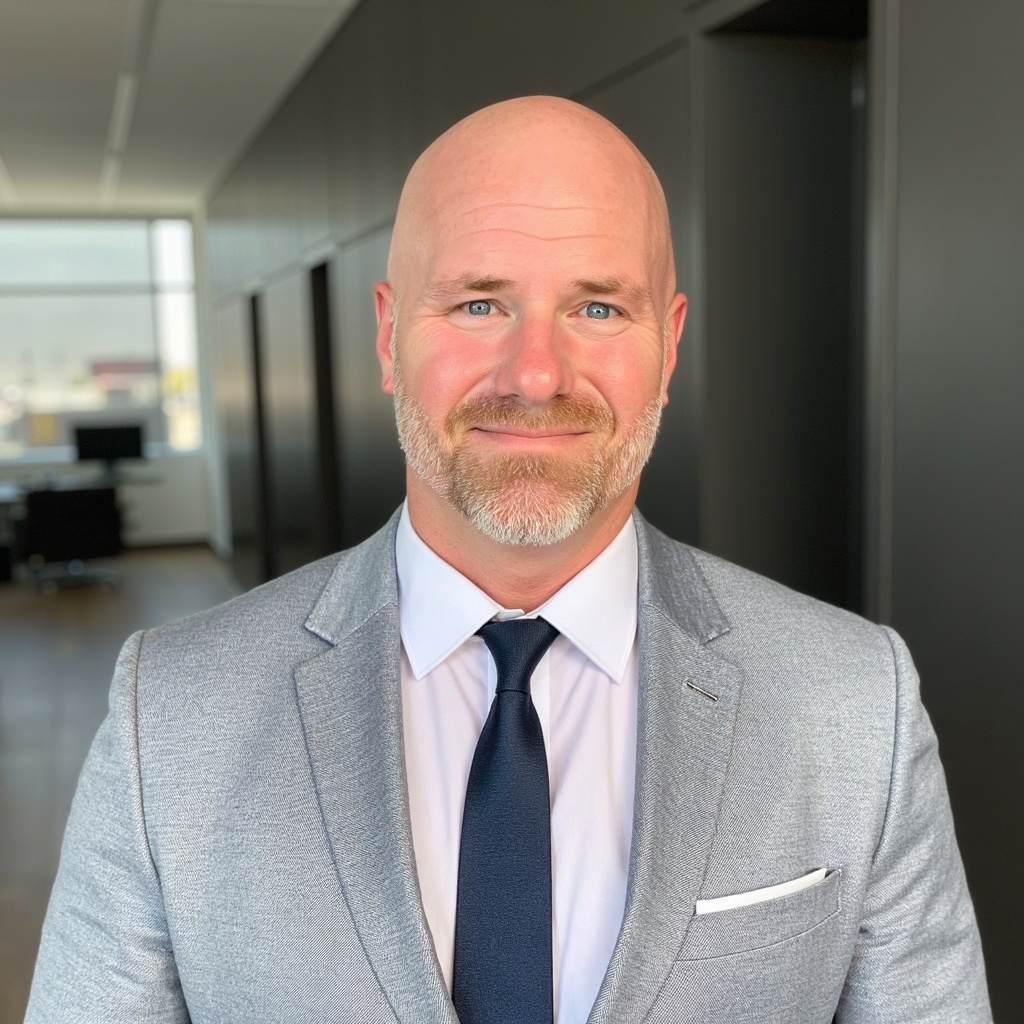
Duke Morgan, Director of Clinical Systems
RN  /  Multistate Compact  /  Active
  • Multi-stateClinical site footprint
  • HundredsClinical users supported
  • MultipleEnterprise EMR platforms owned
  • MultimillionAnnual vendor portfolio
  • 20+Years in healthcare

The unfair advantage

Most healthcare AI dies in the gap between what engineers can build and what clinicians will actually use. I've stood on both sides of that gap.

I started at the bedside. Emergency department, then charge nurse, then CPOE superuser: the person other nurses came to when the system fought them at 3 a.m. That's where I learned the thing you can't get from a requirements document. A workflow isn't broken because it was badly designed. It's broken because somebody designed it without ever having to use it under pressure.

So I moved into the build. EMR implementation, then corporate deployment, then product ownership. Today I direct clinical systems strategy across a multi-state network: multiple enterprise EMR platforms, hundreds of clinical users, and a multimillion-dollar vendor portfolio. I set the roadmap, negotiate the contracts, and answer for the outcome.

And I still write code. SQL against 600+ table clinical schemas. Python for the automation that runs nightly. The multi-agent architecture that routes PHI-bearing work away from commercial models. When a vendor tells me a defect can't be reproduced, I go find it myself, and I usually do.

The combination is rare on purpose. Clinical credibility gets the roadmap adopted. Engineering depth gets it built. Governance literacy gets it approved.
AI strategy, shipped

Healthcare doesn't have an AI ideas problem. It has an approval problem. The constraint was never the model. It was proving that patient data never goes where it shouldn't. I solved for that first, and the capability followed — on both sides of the house: AI inside clinical workflow, and AI absorbing the operational and administrative work that surrounds it.

Architecture The two-lane model: governance as a routing decision, not a policy document
Clinical work schema / code / ops / patient records Data-lane classifier Does this touch PHI? LANE A / PHI PERMITTED Azure AI Foundry active BAA Local inference on-premise, no egress LANE B / NO PHI, EVER Commercial models schema / code / architecture Agent fleet scoped by role & lane Model routing gateway policy enforced in transit

Governance first, capability second

The data policy came before the tooling, which is precisely why the tooling was allowed to exist at all. Sensitive workloads run on BAA-covered or fully local inference, and the boundary is enforced at the routing layer, so compliance never depends on an individual remembering the rule under deadline.

An operating rhythm, not a project

AI strategy only works if it's a standing habit. We meet weekly to look at the work in front of us and ask which parts of it a machine should be doing: clinical workflow inside the EMR, the administrative work around it, and the ordinary daily tasks that quietly consume everyone's afternoon.

Multi-agent orchestration in production

A fleet of specialized agents behind a routing gateway, with local inference reserved for PHI-sensitive workloads. Agents are scoped by role and data lane, never given blanket access.

Systems that review themselves

Completed sessions are fed back through a review pass that mines them for repeatable procedure: what was done by hand, what recurred, what should become automation. The result is a shared knowledge base every agent reads from and writes to, so findings accumulate instead of being rediscovered.

Lifting the whole team, not one specialist

The point of an AI strategy is not a flagship system. It's that a scheduler, an analyst and a nurse each end the week having spent less of it on work that didn't need a person. That's the measure I hold it to.

Roadmap ownership

I own the clinical systems roadmap end to end: multiple server migrations and platform conversions, system-wide EMR application updates, and the introduction of new systems that integrate with the EMR to remove friction from clinical work. Each is architected so AI tooling touches schema and metadata only, never patient data.

Selected work

Platforms I architected and shipped. Employer, vendor and platform names are generalized. The engineering is not.

Flagship Architecture / AI

Clinical Intelligence Orchestration Platform

An enterprise multi-agent AI system routed through a gateway to a BAA-covered cloud AI platform. A deliberate two-lane topology keeps PHI-bearing work on BAA-covered or fully local inference, while routing schema, code and architecture work to commercial models.

Outcome A HIPAA-aligned pathway for AI in clinical operations, and the precedent every later AI initiative builds on.

  • Azure AI Foundry
  • Routing gateway
  • Local inference
  • BAA governance
  • Multi-agent
  • RAG
Platform .NET / React / Azure

Unified Clinical Record Access Platform

A .NET 8 and React/TypeScript application on Azure that consolidates four legacy EMR platforms into a single read-only clinical viewer behind Entra ID SSO. I built the migration tooling as well as the application.

Outcome 3M+ clinical records, 770K+ patient documents and 80K+ treatment cycles migrated. Shared-credential access to legacy systems eliminated across every site, and a cross-clinic PHI exposure closed with a global authorization filter.

  • .NET 8
  • React / TypeScript
  • Azure
  • Entra ID SSO
  • PostgreSQL
  • Data migration
Operational AI Multi-agent / persistent memory

Multi-Agent Workflow Automation Platform

The non-clinical half of the strategy, and the platform the team's automation runs on. Purpose-built agents take on the repetitive work that shouldn't need a person, sharing a persistent, vault-style knowledge base so decisions, context and prior findings carry across sessions instead of being rebuilt from scratch every time someone starts again.

Outcome Each agent reviews its own completed sessions to surface what recurred and what was still being done by hand, then writes those patterns up as reusable skills. Built for one agent first and then rolled out to the rest, so automation coverage grows out of the work itself rather than out of a backlog somebody has to sit down and write.

  • Persistent shared memory
  • Self-generated skills
  • Session review pipeline
  • Scheduled automation
Multi-model AI Interactive agent collaboration

Cross-Model Agent Collaboration Layer

A shared working room where agents built on different model families work the same problem together, proposing, challenging and handing off to one another rather than each running alone in its own silo. Which model handles a given step becomes a per-task decision instead of a platform-wide commitment.

The pairing that matters most is adversarial: work is built by one model and has to survive review by a different one before it can be marked complete. The builder doesn't get to certify its own work.

Outcome Better code, caught earlier. Defects a single model would have shipped get found at review time instead of in testing or in production, because blind spots that survive one model rarely survive two. It's the same instinct as re-validating a change against live state rather than trusting that it worked.

  • Cross-model orchestration
  • Adversarial build–review gate
  • Interactive handoff
  • Shared task context
  • Vendor independence
Operations Python / Flask

EMR Administration & Data Operations Console

A multi-site administration tool spanning every site database in the estate: chart merge, bulk user provisioning, drug library management and permission governance. It uses a plan-then-apply safety model that re-validates against live state and refuses to execute when reality has drifted from the approved plan.

Outcome Closed the gap between approval and execution on production changes. It caught a real divergence the first time it ran.

  • Python / Flask
  • MS SQL Server
  • 19-site estate
  • Change governance
AI assistant Schema intelligence

Clinical Schema Intelligence Assistant

An AI-assisted query assistant over a 600+ table clinical SQL Server schema, deliberately scoped to schema and metadata only, never patient data.

Outcome Cut root-cause analysis time and shortened the ramp for new analysts learning a genuinely hostile data model.

  • RAG
  • MS SQL
  • Metadata-only scope
  • Analyst enablement

What I find that others miss

I'm the escalation point for defects the vendor can't reproduce. These are real root causes, found by reading the system rather than the ticket. The last one isn't a defect at all — it's a cost nobody had counted.

  1. A permission audit trail that silently wasn't

    While executing a governed revocation of an over-provisioned module across two production sites, I found that the vendor's own stored procedure writes no audit record for partial permission changes. The gap affects every such change made through the vendor's own interface, not just automated ones. The revocation itself was verified by a rollback proving zero unintended change.

    The organization believed it had a complete permissions audit trail. It didn't, and nobody would have known.

  2. Lab results lost to a key that wasn't unique

    A data-integrity fault in a laboratory results migration traced back to a record key that was not actually unique, silently collapsing duplicate groups that held genuinely differing payloads. I re-keyed the pipeline and recovered the records that would otherwise have been dropped.

    The load reported success every single time.

  3. A publicly readable patient document store

    I identified a patient document storage bucket configured for public read access and replaced it with authenticated, row-level-secured delivery, alongside a global authorization filter that closed a separate cross-clinic PHI exposure.

    Two findings, both closed before either became an incident.

  4. Charts that couldn't be opened, or found

    A null-dereference in a vendor function made affected patient charts both un-openable and invisible to search. The invisibility is the dangerous half: a chart that throws an error gets reported, while a chart that simply doesn't appear looks like it was never there.

    I traced it and produced a reversible fix.

  5. The admin cost nobody had added up

    Projects, tasks and subtasks, knowledge base articles, change advisory board requests: every one of them began life as manual entry and file upload, done by hand, by people whose time was worth considerably more than that. It never showed up as a line item because it was spread thin — ten minutes here, an afternoon there, across everybody. I built agent skills for each intake path, so creating a record is now a conversation instead of a form to complete and a document to attach.

    Not a defect. Just work everyone had quietly agreed to stop noticing.

Credentials

Licensure and certification, independently verifiable.

Active

Registered Nurse (RN)

Tennessee Board of Nursing  /  Multistate Compact

Active, unencumbered multistate compact licence. The clinical foundation underneath everything else on this page.

Specialization  /  2026

Microsoft SQL Server

Microsoft  /  Coursera Specialization Certificate

Five-course specialization spanning T-SQL, relational design, indexing and performance optimization, and security. The formal counterpart to the daily work: querying and tuning 600+ table clinical schemas.

Verify credential
Course  /  2026

AI Agent Fundamentals with Azure AI Foundry

Microsoft  /  Coursera Course Certificate

Agent design, orchestration and Azure AI service integration, on the same platform the production clinical AI architecture already runs on.

Verify credential
2025

BS, Healthcare Administration

Western Governors University

Health systems, finance and operations, completed while directing clinical systems full time.

2007

AAS, Nursing

Excelsior College

The starting point. Emergency and perioperative practice followed.

Capabilities

AI & Automation

  • Multi-agent orchestration
  • Azure AI Foundry
  • Model routing gateways
  • Local / on-premise LLM deployment
  • Retrieval-augmented generation
  • AI-assisted workflow automation
  • Automation opportunity discovery

Clinical Informatics

  • Enterprise EMR product ownership
  • Clinical workflow design
  • Clinical decision support, CPOE
  • HL7 / FHIR interoperability
  • Legacy EMR data migration
  • Multi-site go-live leadership

Compliance & Security

  • HIPAA and PHI governance
  • BAA-governed AI architecture
  • HITRUST-aligned design
  • Entra ID / SSO
  • Role-based access control
  • Audit and access remediation
  • Joint Commission / CMS readiness

Engineering

  • MS SQL Server (600+ table schemas)
  • Python
  • PowerShell
  • .NET
  • React / TypeScript
  • REST APIs, Git
  • Azure, Supabase / PostgreSQL

Leadership

  • Clinical systems roadmap ownership
  • Vendor and contract negotiation
  • Multimillion-dollar budget stewardship
  • Executive and C-suite engagement
  • Cross-functional program delivery
  • Multi-state deployment

Clinical Foundation

  • Registered Nurse, multistate compact, active
  • Emergency department operations
  • Perioperative operations
  • Nursing leadership
  • CPOE superuser

Experience

  1. Jun 2017 – Present

    Director of Clinical Systems

    Inception Fertility

    Clinical systems strategy and product ownership across a multi-state clinical footprint serving hundreds of users. I own the lifecycle of multiple enterprise EMR platforms, a multimillion-dollar annual vendor portfolio, and the clinical systems roadmap: server migrations, platform conversions, system-wide EMR application updates, and new systems integrated with the EMR. Sustained 95% on-time delivery across upgrades, cloud migrations and compliance programs.

  2. Nov 2016 – Jun 2017

    Clinical Implementation Specialist, Perioperative Systems

    MEDHOST

    Led surgical workflow optimization for multi-hospital EMR implementations, including gap analysis and future-state design across OR, pre-op and PACU.

  3. Mar 2016 – Oct 2016

    Clinical Application Analyst, Corporate Deployment

    Community Health Systems

    Built enterprise EMR workflow templates to corporate clinical and regulatory standards, and supported go-lives onsite across emergency, surgical and med/surg departments.

  4. Jan 2013 – Mar 2016

    Support & Implementation Clinical Analyst, RN

    MEDHOST

    Clinical workflow analysis across ED, OR and Med/Surg. Configured EMR systems to clinical best practice and validated build decisions with bedside clinicians before go-live.

  5. 2005 – 2013

    Emergency Department Charge Nurse

    Williamson Medical Center  /  Southern Hills Medical Center (HCA)

    Led ED nursing operations and served as CPOE superuser, streamlining documentation workflows and routing operational findings back to IT.

Let's talk.

Open to conversations about clinical AI leadership, enterprise EMR strategy and healthcare platform architecture.